8:00 - 19:00

Our Opening Hours Mon. - Fri.

975.789.098

Always online

Facebook

Twitter

Search
 

Class Notes

LearningTheLaw > Class Notes (Page 2)

POLITICAL DEFECTION AND CONSTITUTIONAL VACUUM-IN1 NIGERIA: A CRITIQUE OF THE UNEQUAL CONSEQUENCES FOR LEGISLATORS AND EXECUTIVE OFFICE HOLDERS
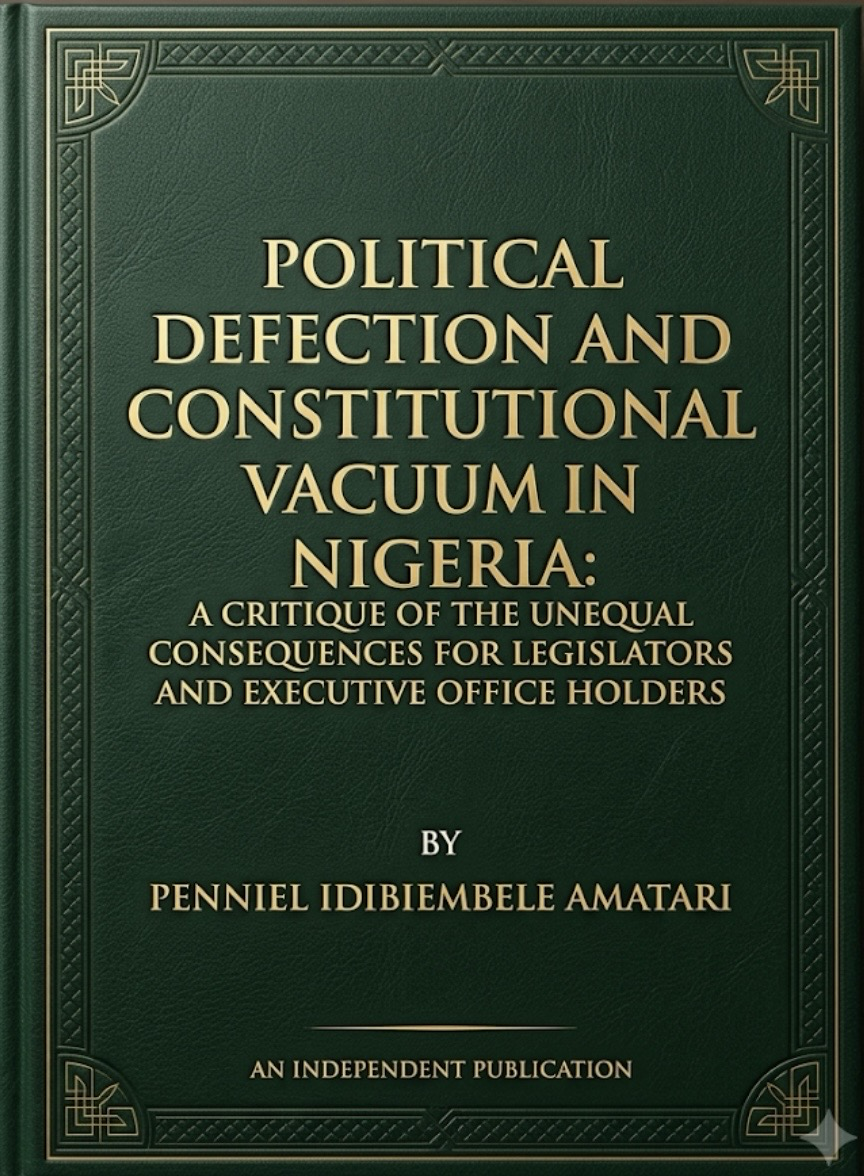
POLITICAL DEFECTION AND CONSTITUTIONAL VACUUM IN NIGERIA: A CRITIQUE OF THE UNEQUAL CONSEQUENCES FOR LEGISLATORS AND EXECUTIVE OFFICE HOLDERS ABSTRACT Political defection has become one of the most visible symptoms of institutional weakness in Nigeria's Fourth Republic. Because the Constitution of the Federal Republic of Nigeria 1999 (as amended) makes party sponsorship a precondition of contesting any elective office, and because the Supreme Court has repeatedly held that the electoral mandate belongs to the political party rather than to the individual candidate, the question of what happens when an office holder abandons the party that sponsored him ought, in principle, to be governed...

Continue reading

Trademarks in Nigeria: Definition, Nature and Functions Under the Trade Marks Act

Walk into any major supermarket in Lagos or Kano and the shelves tell a story of trademark law in action. The red-and-white Indomie packaging, the distinctive Coca-Cola bottle shape, the Dangote logo on bags of cement, the green MTN branding across every billboard on the expressway: each of these is a trademark, each is a registered piece of intellectual property, and each represents a business decision to invest in a brand identity that the law will protect against imitation. Now step outside and walk past the roadside market, where counterfeit Indomie noodles in packaging barely distinguishable from the original are...

Continue reading

Copyright in Computer Programs and Digital Works in Nigeria

Walk into any computer repair shop in Alaba International Market or along Computer Village in Ikeja and you will almost certainly find Windows and Microsoft Office being installed on customer machines from bootleg discs or USB drives, for a small fee. Visit any Nigerian university campus and you will find students using pirated versions of SPSS, AutoCAD, and Adobe Creative Suite without a second thought. The Nigerian software market, by most credible estimates, has historically had software piracy rates among the highest in the world, a situation that persisted for decades in part because the old copyright framework provided inadequate...

Continue reading

Remedies for Copyright Infringement in Nigeria: Civil and Criminal Action

In 2020, the Court of Appeal in Lagos Division upheld an award of N5.4 billion against Multichoice Nigeria for using copyrighted musical works across its DSTV platform without licence or payment. It is, to date, the largest published copyright damages award in Nigerian legal history, and it did not happen because Multichoice was a careless or unsophisticated operator. It happened because the company failed to ensure it held valid licences for the works it was broadcasting, and because the rights holder had the means and the determination to pursue the full range of remedies the law makes available. Understanding remedies is...

Continue reading

Copyright Infringement in Nigeria: Elements, Defences and Burden of Proof

An Afrobeats producer samples a two-bar percussion loop from a 1974 highlife recording and builds an entirely new track around it. A fashion blogger reposts a photographer's image on Instagram with a different watermark and no credit. A printing shop reproduces fifty copies of a Nigerian textbook for a group of university students. In each scenario someone has used a copyrighted work without permission. The question this article answers is what the copyright owner must prove to succeed in an infringement action, what the defendant can argue in response, and how the burden of proof operates in proceedings before the...

Continue reading

Assignment and Licensing of Copyright in Nigeria

Assignment and licensing are the mechanisms by which copyright moves from the hands of the person who created it into the commercial marketplace. Getting these transactions right is not a concern only for lawyers advising the music and film industries. It is a practical skill for anyone who creates, commissions, or publishes copyrighted work in Nigeria, and it is a core examination topic because the rules governing how copyright is transferred are precise, technically demanding, and often misapplied in practice. 1. Copyright as Movable Property: The Constitutional Foundation Section 30(1) of the Copyright Act 2022 provides that, for the purposes of Chapter...

Continue reading

Fair Dealing in Nigerian Copyright Law: What Changed Under the 2022 Act

Fair dealing is the most practically significant exception to copyright protection in Nigerian law. It is where the exclusive rights of copyright owners give way to the public interest in access, education, criticism, and creativity. And it is the area where the Copyright Act 2022 makes its single most far-reaching change from the law that preceded it: a deliberate shift from a narrow, closed list of permitted purposes to an open, flexible standard capable of evolving with technology and social practice. 1. What Fair Dealing Is and Why It Exists Fair dealing is a statutory defence to an act that would otherwise...

Continue reading

Duration of Copyright in Nigeria: How Long Does Protection Last?

Chinua Achebe died on 21 March 2013. He left behind Things Fall Apart, Arrow of God, A Man of the People, Anthills of the Savannah, and a body of critical and poetic work that generations of Nigerian school children have read, studied, and built upon. The question that ultimately governs how freely future Nigerian writers, adaptors, educators, and publishers can use these works is not merely one of literary respect but of copyright law: when do Achebe's works enter the public domain? The answer to that question, and the principles that govern it across all categories of creative work in Nigeria,...

Continue reading

Moral Rights in Nigerian Copyright Law: Attribution, Integrity and the 2022 Act Changes

A spoken-word poet performs a piece at a Lagos open-mic night, records it on a phone, and posts it online. Within a week the video has been re-shared hundreds of times. By the second week, a motivational account with half a million followers has posted the entire poem as a screenshot with no credit. A different account has taken the first verse and appended it to a self-help message that subtly distorts the poet's original meaning. A third account has posted it under a different person's name altogether. None of these accounts paid the poet anything. But more than the...

Continue reading

Economic Rights of Copyright Owners in Nigeria

A hotel in Victoria Island plays a curated playlist of Afrobeats music in its lobby and poolside areas, seven days a week, to create atmosphere for paying guests. A cable television provider transmits music videos and films carrying background scores composed by Nigerian artists. A streaming platform makes an Afrobeats album available for on-demand listening anywhere in the world. In all three scenarios, copyrighted works are being commercially exploited by parties who have not created them. The question this article answers is what rights the creators and rights holders actually hold against these parties, and what the Copyright Act 2022...

Continue reading

Join our Newsletter

Join 1,000+ law students and professionals. Get our top-rated class notes and legal analysis delivered straight to your inbox every Tuesday and Friday.

We don’t spam! Read our privacy policy for more info.